

20 Oct Square Peg 1984
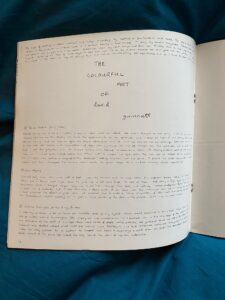
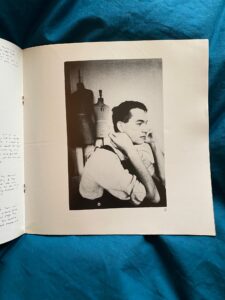
This was my first cover and subsequent article. I was hugely proud of it and excited to see it come out but remember the shame and embarrassment when it landed as I was sitting in The Bell in Kings Cross with a group of ‘friends’ when it was distributed and they mocked it, not knowing I was in it. Though to be fair everyone sneered at everything. I felt humiliated and any sense of pride was quashed. Hubris..! Believe it or not, everyone at the time thought it was second rate to be in a gay publication and looked down their noses at such things. I thought it was niche and cool but lacked the confidence to shout down the sneers. Below is a detailed description of the magazine which puts its life into context.
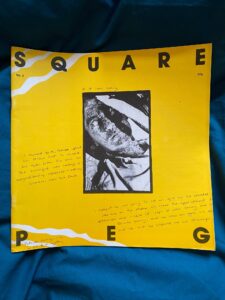
The queer arts periodical Square Peg was released in 1982 by a collective of seven gay men who attended the same nightclub in North London, The Bell.
Initially the founding members gathered as a discussion group with meetings occasionally taking place at Derek Jarman’s flat on the Charing Cross Road. The publication dubbed itself as a journal for ‘contemporary perverts’. Its content was unflinching towards radical issues with articles addressing sexually explicit acts, S&M, various fetishes and rubber fashion. ‘We continue to be Sexy, Sex-positive, and Seriously Offensive’ declares one editorial. From the outset the editors saw the need to balance content for gay men and lesbian readers. Pioneering articles on gay skinheads, heroin and addiction, policing, body image, misogyny among gay men, or racism on the gay scene, sit alongside discussions on co-parenting or the benefits of a macrobiotic diet for people with AIDS. The editors also valued the magazine as an experimental space to platform new work by emerging artists, writers and creatives.
Square Peg engaged an overwhelming range of contributors across literature, performance, music and art. In its ten-year history the pages of Square Peg featured Angela Carter, Derek Jarman, Frankie Goes to Hollywood, Barbara Hammer, Morrissey, Sunil Gupta, John Peel, Kathy Acker, COIL, Gilbert & George, David Robilliard, The Grey Organisation and Bronski Beat and many others.
The magazine was sold largely in London at nightclubs, the ICA bookshop, Gay’s the Word and a few independent bookshops. An editor recalls that Michael Clark refused to buy a copy, saying “I only read pornography”. The square format and glossy paper of the publication were key to its aesthetic despite the bespoke shape being an expensive waste of paper. The publication is a testament to the diversity of the London arts scene in the 1980s with its pages warmly referencing parties and club nights illustrated by numerous adverts, together with reviews of film, theatre and performance. Despite the friendly humour of its editorial voice the challenges of queer publishing amidst the emergence of Section 28 are made apparent.
A scarce collection. While individual issues of the magazine are broadly represented institutionally, we can only find a full collection of 31 issues at The British Library and the Bishopsgate Institute.